
Buying property in India is one of the biggest financial decisions most people make in their lifetime. Whether you are a first-time buyer looking for a family home, an investor seeking good returns, an NRI planning for the future, or a family wanting a plot, villa, or rental space, understanding how to buy property in India correctly protects your hard-earned money and ensures long-term peace of mind.
This comprehensive guide walks you through the entire process in 2026 — from defining your budget and verifying legal documents to registration and taking possession. It covers practical tips, checklists, common pitfalls, and current realities so you can make informed, confident decisions.
Why Buying Property in India Requires Careful Planning?
Property buying in India is not just about finding a good location or a nice-looking house. It involves multiple layers: budget planning, thorough legal verification, understanding future growth potential, construction quality, resale value, and hidden costs. In 2026, buyers have access to more transparent platforms, verified listings, and stricter RERA regulations, but risks like title disputes, delayed projects, and unexpected charges still exist.

Smart buyers today demand transparent pricing, verified seller credentials, clear project timelines, and professional guidance. Rushing the process or skipping due diligence often leads to disputes, financial losses, or properties that underperform in value. Proper planning turns property into a safe asset that appreciates over time and generates rental income or meets family needs.
Step-by-Step Guide on How to Buy Property in India
Follow this practical, action-oriented process for a smooth purchase:
- Define Your Budget Calculate your total budget including down payment (usually 10–20%), stamp duty (3–8% depending on state), registration charges (~1%), GST on under-construction properties, legal fees, and a 5–10% contingency. Factor in your income, existing loans, and future EMIs. Use online EMI calculators and consult banks for pre-approval.
- Choose the Type of Property Decide between residential plots, independent houses, luxury villas, ready-to-move apartments, under-construction projects, rental halls, or commercial spaces based on your goal (self-use, investment, or rental income).
- Shortlist Locations Prioritize connectivity (metro, highways, airports), infrastructure growth, schools, hospitals, employment hubs, and future development plans. Check master plans from local development authorities.
- Check Seller or Builder Credibility Verify the developer’s track record, past project delivery, customer reviews, and financial stability. For individual sellers, check identity and ownership history.
- Verify Title and Ownership Confirm the seller has clear, marketable title with no disputes. Review the complete chain of title documents.
- Review Legal Approvals and Compliance Ensure RERA registration (for projects), approved building plans, land-use permissions, and other NOCs.
- Compare Home Loan Options Check eligibility, interest rates (currently starting from around 7.10% p.a. in mid-2026), processing fees, and tenure. Get pre-approval letters from multiple lenders.
- Negotiate the Price Research comparable properties in the area. Negotiate based on market rates, property condition, and payment terms. Get everything in writing.
- Sign the Agreement to Sell Execute a detailed agreement with clear timelines, payment schedule, penalties for delay, and contingencies. Pay token money (usually 10%).
- Pay Stamp Duty and Registration Charges Pay stamp duty (state-specific) and registration fees. Many states now support online or digital processes with Aadhaar linking and video recording.
- Register the Property Register the sale deed at the sub-registrar’s office. This transfers legal ownership.
- Take Possession Inspect the property thoroughly, verify all utilities and amenities are functional, collect keys, and update mutation/khata records in your name. Pay property tax in your name going forward.
Types of Property You Can Buy in India
Buyers in 2026 commonly explore these categories:

- Residential Plots — Ideal for custom-built homes; check zoning and conversion certificates.
- Independent Houses — Full ownership with land; good for families wanting privacy.
- Luxury Villas — Premium gated communities with modern amenities and higher appreciation potential.
- Apartments/Flats — Ready-to-move or under-construction; look for RERA-approved projects.
- Rental Halls / Commercial Spaces — For income generation through leasing.
- Farmhouses or Premium Land — For weekend homes or long-term investment (subject to land-use rules).
A trusted real estate platform with verified listings across plots, houses, villas, rental halls, and luxury properties helps you compare options side-by-side with transparent details.
Important Legal Checks Before Buying Property
Legal due diligence is the most critical step to avoid fraud, disputes, or losing your investment. Always engage a qualified property lawyer.
Key checks include:
- Title Deed Verification — Confirm clear ownership chain with no breaks or disputes.
- Encumbrance Certificate (EC) — Shows the property is free from mortgages, liens, or legal claims.
- RERA Approval — Mandatory for most projects; check registration number, promoter details, and project status on the state RERA portal.
- Approved Building Plan & Layout — Verify sanctions from local authorities.
- Land Use Verification — Ensure agricultural land is converted if needed.
- Seller Identity & Authority — Confirm the seller is authorized to sell (especially in joint ownership or company-owned properties).
- Mutation and Tax Records — Check khata, Record of Rights (RoR), and latest property tax receipts.
- Occupancy/Completion Certificate (OC/CC) — Required for ready properties to confirm legal habitability.
Skipping these checks is one of the biggest reasons buyers face prolonged legal battles or financial losses.
Documents Required to Buy Property in India
Here is a clear checklist of essential documents:
- Sale Deed / Title Deed (from seller)
- Agreement to Sell
- Encumbrance Certificate (EC)
- Property tax receipts (latest)
- Approved building/layout plan
- RERA registration certificate (for projects)
- No Objection Certificates (NOCs) from relevant authorities
- Occupancy/Completion Certificate
- Seller’s identity proof (Aadhaar, PAN, passport)
- Buyer’s identity and address proof
- PAN card (mandatory for transactions above certain limits)
- Loan sanction letter and related documents (if financed)
- Power of Attorney (if applicable, especially for NRIs)
Keep digital and physical copies of everything.
How to Evaluate Property Value and Total Cost?
A fair price depends on multiple factors:
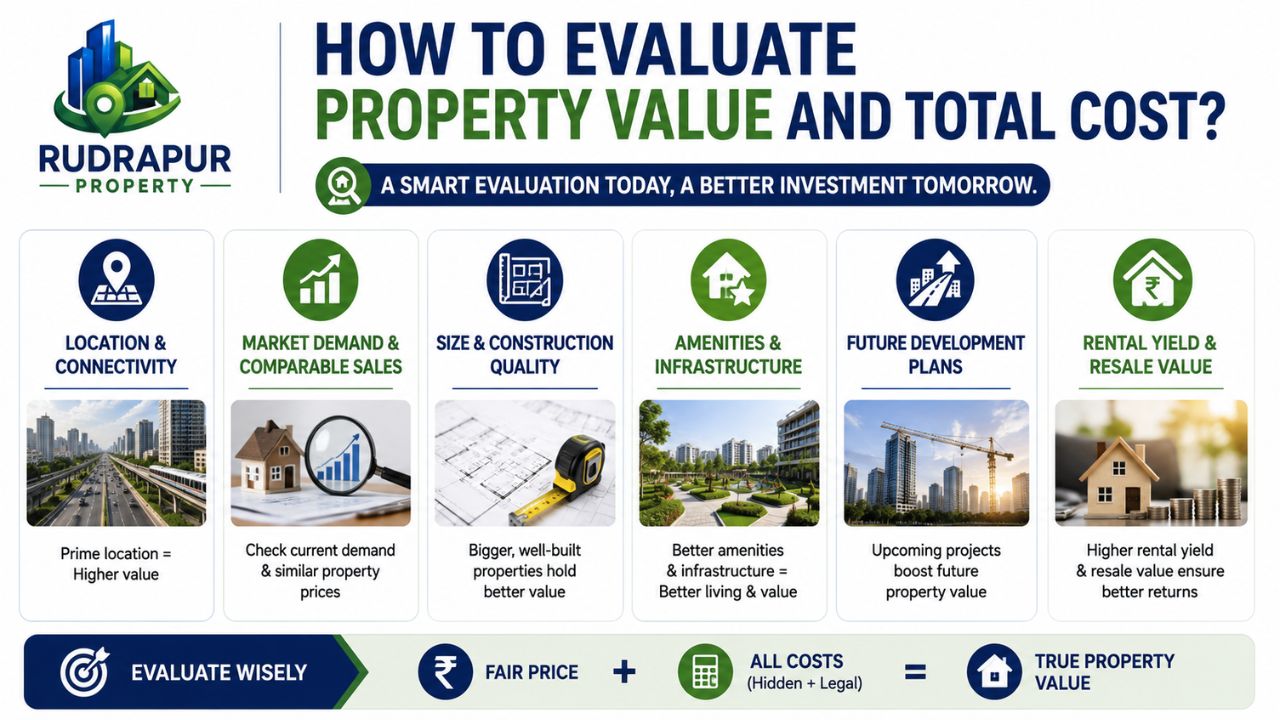
- Location and connectivity
- Current market demand and comparable sales
- Plot size, built-up area, and construction quality
- Amenities and infrastructure
- Future development plans in the area
- Rental yield potential and resale value
Base price vs Total Cost: The quoted price is rarely the final amount. Add stamp duty, registration, GST (on under-construction), legal fees, brokerage, and any society/maintenance charges. Always request a full cost breakup in writing.
Home Loan and Financing Tips
Most buyers use home loans. Key points for 2026:
- Eligibility — Based on income, age, credit score (ideally 750+), and existing obligations. Salaried and self-employed have different criteria.
- Down Payment — Minimum 10–20%; higher down payment reduces EMI and interest burden.
- Interest Rates — Currently starting from around 7.10% p.a.; compare fixed vs floating rates.
- EMI Planning — Keep EMI within 40–50% of monthly income.
- Pre-approval — Get it early to know your exact borrowing power and negotiate better.
- Avoid Over-Borrowing — Factor in future expenses, job stability, and interest rate fluctuations.
Tax benefits under Sections 80C and 24(b) make home loans attractive — consult a tax advisor.
Common Mistakes to Avoid When Buying Property in India
- Skipping or rushing legal verification and title checks.
- Not verifying the builder’s or seller’s background and past projects.
- Ignoring hidden costs (stamp duty, GST, maintenance, parking, etc.).
- Buying in a location with poor connectivity or uncertain future growth.
- Not understanding full registration and transfer costs.
- Failing to do a physical site inspection (especially for under-construction properties).
- Not reviewing the project’s future development plans or master plan.
- Relying only on verbal assurances instead of written agreements.
Property Buying Tips for NRIs and Outstation Buyers
NRIs and buyers living outside the city/state face extra challenges. Key advice:
- Use a registered Power of Attorney for someone trustworthy in India.
- Strictly follow FEMA guidelines — NRIs can buy most residential and commercial properties but not agricultural land or farmhouses in many cases.
- Route all payments through NRE/NRO accounts for clear trails.
- Hire an independent lawyer for title search instead of relying solely on the developer.
- Prefer RERA-registered projects with clear delivery timelines.
- Verify everything remotely through video calls, trusted local consultants, or verified platforms.
Professional guidance and verified listings significantly reduce risks for remote buyers.
Why Choose a Trusted Real Estate Platform?
A reliable platform makes the entire journey safer and simpler. Look for one that offers:
- Verified property listings with complete legal and project details
- Transparent pricing and full cost breakdowns
- Wide selection across residential plots, independent houses, luxury villas, rental halls, apartments, and premium properties
- Local market expertise and updated information
- Easy inquiry and comparison tools
- Support throughout the process, including document guidance
Such platforms help you shortlist options confidently, compare multiple properties, and connect with verified sellers or developers without unnecessary middlemen.
Conclusion
Understanding how to buy property in India properly turns a complex process into a rewarding investment or a secure family asset. By planning your budget carefully, verifying every legal document, evaluating location and value, comparing financing options, and avoiding common mistakes, you significantly reduce risks and increase the chances of a successful purchase. In 2026, with better digital tools and stronger buyer protections, informed buyers are better positioned than ever.
Take your time, seek professional advice where needed, and always prioritize verified information over haste.
Are you looking to buy property in India with confidence and complete peace of mind? Whether you want to purchase a residential plot, independent house, luxury villa, rental hall, or premium property, our platform helps you find the right option with trusted listings and clear information. Explore verified properties, compare choices, and take the next step toward your ideal investment today. Contact us now for property guidance, inquiries, and available listings.
Call/Whatsapp: +91 7060150855
Visit: rudrapurproperty.com
Serving: whole rudrapur and surrounding areas
Frequently Asked Questions (FAQs)
What documents are required to buy property in India?
Key documents include the sale deed/title deed, agreement to sell, encumbrance certificate, approved building plans, RERA certificate (where applicable), property tax receipts, NOCs, and identity proofs of both buyer and seller. A complete checklist is provided earlier in this guide.
How do I verify property ownership?
Review the title deed chain, obtain a recent Encumbrance Certificate, check mutation/khata records, and consult a property lawyer for a full title search. For projects, verify RERA registration details.
Is RERA important when buying property?
Yes. RERA registration ensures the project follows regulations, provides buyer protections, clear timelines, and a mechanism for grievances. Always check the project’s RERA status on the official state portal before booking.
What hidden costs should I expect?
Expect stamp duty (3–8%), registration charges (~1%), GST on under-construction properties, legal fees, brokerage, maintenance deposits, and possible parking or club charges. Always ask for a full cost sheet.
Can NRIs buy property in India?
Yes, NRIs can buy most residential and commercial properties under FEMA rules. They generally cannot purchase agricultural land or farmhouses. Proper documentation, NRE/NRO account usage, and legal compliance are essential.
How do I know if a property price is fair?
Compare recent sales of similar properties in the same locality, factor in location advantages, construction quality, amenities, and future growth. Engage a local valuer or use data from trusted platforms for objective assessment.