
Buying property in India is one of the biggest financial decisions most people make in their lifetime. Whether you are a first-time buyer, a family looking for a home, an investor, or an NRI planning to invest back home, following a step-by-step process for buying property in India is essential to avoid costly mistakes, legal disputes, and financial stress. This comprehensive property buying guide India covers everything from initial planning to final possession, helping you make informed, confident decisions.
Why a Step-by-Step Process Matters?
Rushing into a property purchase based on emotions or pressure often leads to regret. A structured approach offers multiple benefits:
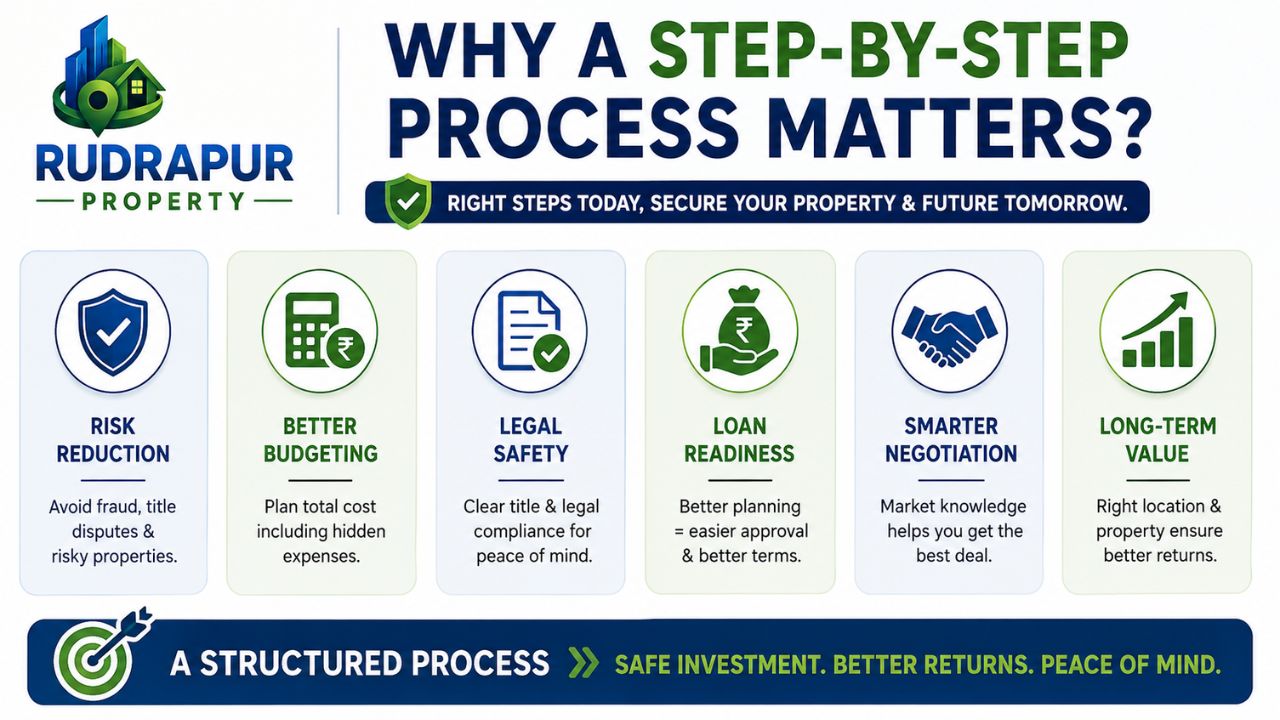
- Risk Reduction: Proper verification minimizes chances of fraud, title disputes, or buying disputed properties.
- Better Budgeting: You account for the full cost, including hidden expenses, avoiding cash flow crises.
- Legal Safety: Thorough document checks ensure clear title and compliance with laws like RERA.
- Loan Readiness: Pre-planning finances improves approval chances and secures better terms.
- Smarter Negotiation: Market knowledge empowers you to negotiate effectively on price and terms.
- Long-Term Value Protection: Choosing the right location and property supports appreciation and livability.
In 2026, with evolving regulations, digital tools, and market dynamics, a methodical process is more important than ever.
Step 1: Set Your Budget
Start by determining what you can realistically afford. Calculate your savings, monthly income, existing debts, and EMI capacity. A general rule is that your EMI should not exceed 40-50% of your take-home pay.
Key factors to consider:
- Down payment (typically 10-20% for loans).
- Loan eligibility based on income, credit score (ideally 750+), and age.
- Hidden costs:
- Stamp duty (varies by state, often 4-7%; lower for women in many states).
- Registration fees (usually 1%).
- GST on under-construction properties (5% for most residential).
- Brokerage (1-2% or as negotiated).
- Legal and home inspection fees.
- Interiors, furnishing, maintenance, and society charges.
- Home loan processing fees and insurance.
Use online affordability calculators from banks or platforms. Factor in future expenses like children’s education or inflation. For NRIs, consider currency conversion and repatriation rules.
Step 2: Choose the Right Property Type
Your needs, budget, and goals determine the property type:

- Residential Plots: For custom construction; good for long-term investment.
- Apartments/Flats: Popular in cities; offer amenities and security.
- Independent Houses: More privacy and space; higher maintenance.
- Villas: Luxury option with modern amenities.
- Under-Construction Homes: Potentially lower prices and capital appreciation, but higher risk and delays.
- Ready-to-Move Homes: Immediate possession; ideal for families.
- Commercial Property: For investors seeking rental income (with additional considerations).
Evaluate based on lifestyle (e.g., proximity to work/schools), investment horizon, and resale/rental potential. Families may prefer ready-to-move, while investors might opt for under-construction in growth corridors.
Step 3: Research Location and Market Trends
Location drives 70-80% of a property’s value and livability. Research:
- Connectivity: Roads, metro, railways, airports.
- Social Infrastructure: Schools, hospitals, markets, parks.
- Infrastructure Growth: Upcoming projects, metro expansions, smart city initiatives.
- Future Appreciation: Developing areas with job hubs often yield better returns.
- Basic Amenities: Reliable water, electricity, drainage, and internet.
- Rental Demand and Safety: Neighborhood vibe, crime rates, and community.
Visit multiple times—day, evening, weekends—to assess traffic, noise, and flooding risks. Check local market trends via portals like Magicbricks or 99acres for price movements. For investors, analyze rental yields.
Step 4: Shortlist Properties
Once you have options, compare them systematically. Create a checklist covering:
- Price per sq ft vs. market rate.
- Carpet vs. super built-up area.
- Location advantages.
- Construction quality and builder reputation.
- Amenities (gym, pool, parking, security).
- Legal status and approvals.
- Seller/developer track record (past projects, reviews).
Visit shortlisted properties, talk to residents, and gather feedback. Use comparison spreadsheets. Prioritize verified RERA-registered projects for transparency.
Step 5: Verify Property Documents
This is critical for property verification before buying. Engage a lawyer for due diligence.
Key documents to check:
- Title Deed: Establishes ownership history (ideally 30+ years).
- Sale Deed: Previous transfer records.
- Encumbrance Certificate (EC): Confirms no loans, liens, or disputes.
- Approved Building Plan: From local authorities.
- RERA Registration: Mandatory for most projects; verify on state RERA portal.
- Mutation Records/Khata Certificate: Updates ownership in revenue records.
- Property Tax Receipts: Up-to-date payments.
- Occupancy Certificate (OC) and Completion Certificate (CC): For ready properties.
- NOCs: From society, bank, or authorities (e.g., environmental).
Request originals or certified copies. A clear title search protects against future legal battles.
Step 6: Inspect the Property Physically
Never skip a thorough site visit. Check:
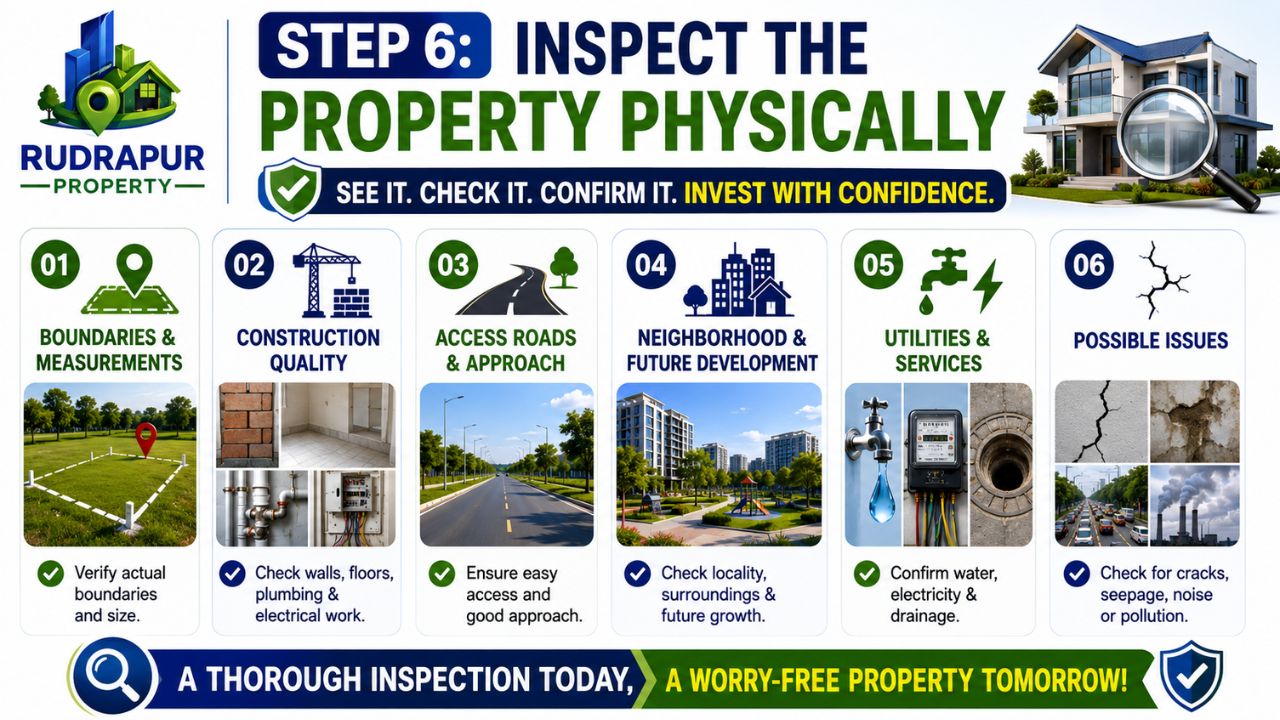
- Actual boundaries and measurements.
- Construction quality (walls, floors, plumbing, electrical).
- Access roads and approach.
- Neighborhood condition and future developments.
- Water supply, electricity, and drainage.
- Issues like cracks, seepage, noise, or pollution.
For under-construction, inspect the site progress against promised timelines. Hire a professional inspector for technical evaluation.
Step 7: Arrange Home Loan Financing
If financing, start early. Compare lenders for interest rates, fees, and tenure.
Eligibility and documents:
- Stable income, good CIBIL score.
- Salary slips/ITR, bank statements, Form 16.
- Property documents for technical/legal verification by bank.
- ID/address proof.
Apply for pre-approval to strengthen negotiations. The process includes credit check, property valuation, and sanction letter. Disbursement happens post-agreement and registration in many cases. Plan EMI comfortably.
Step 8: Negotiate the Price and Terms
Use market data, property condition, and demand to negotiate. Discuss:
- Final price and inclusions (fixtures, parking).
- Payment schedule and milestones.
- Possession timeline and penalties for delays.
- Booking amount (usually 5-10%).
- Any warranties or repairs.
Get everything in writing. A good deal balances price with favorable terms.
Step 9: Sign the Agreement to Sell
This binding contract precedes the sale deed. It should detail:
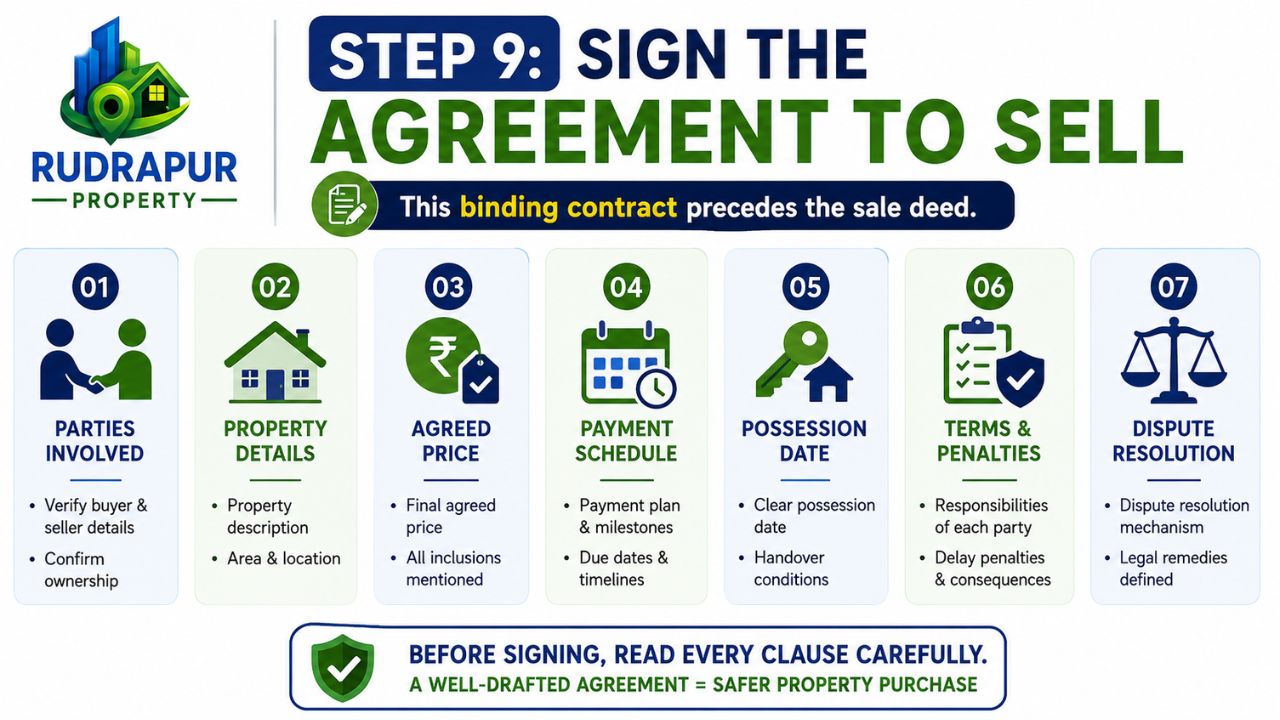
- Parties involved.
- Property description and price.
- Payment schedule and timelines.
- Possession date.
- Responsibilities, penalties, and dispute resolution.
Pay the booking/token amount. Review with your lawyer before signing.
Step 10: Pay Stamp Duty and Registration Charges
These government levies are non-negotiable. Stamp duty (typically 4-7%, state-specific; concessions for women/first-time buyers in some states) and registration fee (around 1%) must be paid. Calculate based on circle rate or transaction value (whichever higher). Pay via authorized channels.
Step 11: Register the Property
Registration at the sub-registrar’s office makes the transfer legal. Requirements:
- Original documents, IDs (Aadhaar, PAN), sale deed.
- Buyer, seller, and two witnesses present.
- Biometric verification.
- Payment of duties.
The registered sale deed is your proof of ownership. Online options exist in many states.
Step 12: Take Possession and Update Records
After registration:
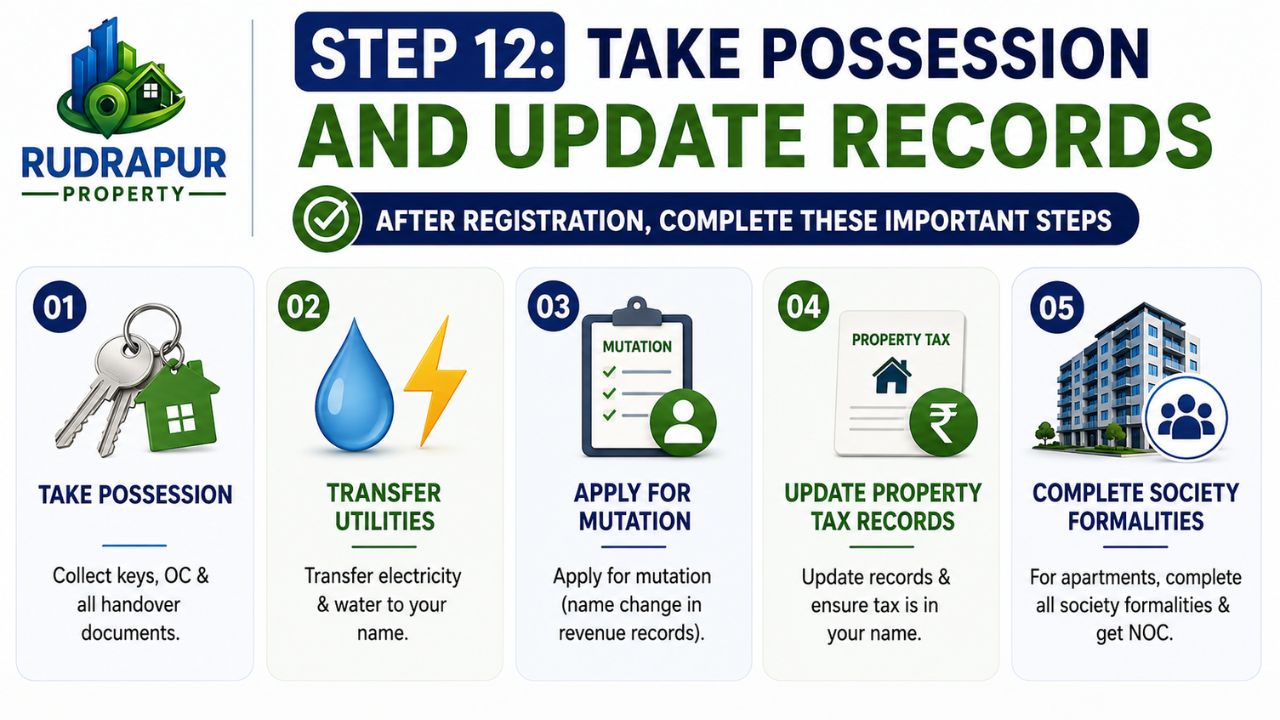
- Collect keys, OC, handover documents.
- Transfer utilities (electricity, water) to your name.
- Apply for mutation (name change in revenue records).
- Update property tax records.
- For apartments, complete society formalities.
This completes the home buying process India.
Common Mistakes to Avoid
- Skipping legal verification or relying on verbal promises.
- Ignoring hidden costs and overextending budget.
- Not comparing multiple options or visiting sites.
- Poor due diligence on builder reputation or RERA status.
- Rushing registration without full checks.
- Neglecting loan pre-approval or credit score.
Conclusion
The step-by-step process for buying property in India—from budgeting and research to legal verification, financing, registration, and possession—ensures a safe, rewarding investment. Proper planning, thorough property verification before buying, and adherence to legal steps to buy property protect your hard-earned money and secure your future. Stay patient, consult experts (lawyers, financial advisors), and leverage trusted platforms for listings, guidance, and support. With diligence, your dream property can become a source of pride and value for generations.
FAQs
What is the first step in buying property in India?
Assess your budget, savings, loan eligibility, and overall affordability, including hidden costs.
How do I verify property documents before buying?
Check title deed, encumbrance certificate, RERA registration, approved plans, tax receipts, and OC/CC with a lawyer’s help.
What documents are needed for property registration?
Sale deed, IDs, proof of stamp duty payment, and relevant NOCs. Buyer, seller, and witnesses are usually required.
Is a home loan required for buying property?
Not always, but most buyers use one. Pre-approval strengthens your position even if paying cash.
How much stamp duty is charged in India?
It varies by state (typically 4-7% of property value or circle rate), with possible concessions. Check state-specific rules.
What is the role of RERA in property buying?
RERA ensures transparency, timely delivery, and buyer protection through project registration and escrow mechanisms.
When do I get possession of the property?
For ready-to-move, after registration. For under-construction, as per agreement timelines, ideally after OC issuance.