
Buying a property is a significant milestone, but many home buyers focus primarily on location and price while overlooking one of the most critical aspects — proper documentation. Property documents required for home buyers form the legal foundation of any successful transaction, protecting your ownership rights, ensuring loan eligibility, and safeguarding against future disputes.
This detailed guide explains everything first-time buyers, families, investors, and NRIs need to know about essential property documents in India, with special focus on residential properties in Rudrapur and surrounding areas of Uttarakhand. Whether you are purchasing a plot, independent house, apartment, villa, or rental property, understanding these documents helps you buy with confidence.
Why Property Documents Matter?
Property documents required for home buyers are not mere formalities — they are your legal shield. In India, where title disputes, fraudulent sales, and incomplete approvals are unfortunately common, thorough document verification prevents costly legal battles, financial losses, and sleepless nights.
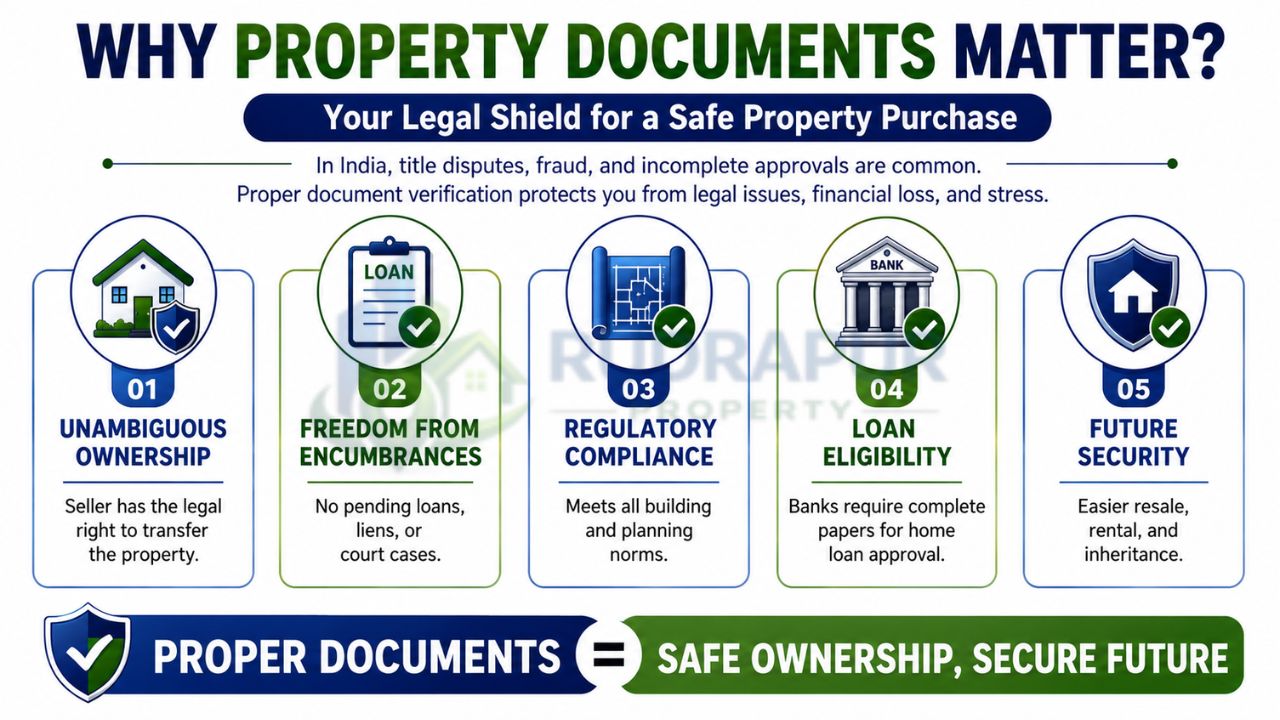
Clear documentation proves:
- Unambiguous ownership — The seller has the right to transfer the property.
- Freedom from encumbrances — No pending loans, liens, or court cases.
- Regulatory compliance — The property meets all building and planning norms.
- Loan eligibility — Banks require complete papers for home loan approval.
- Future security — Proper documents make resale, rental, or inheritance smoother.
In Rudrapur and Uttarakhand, where development is growing rapidly, local buyers must also consider regional factors such as seismic zone requirements, municipal approvals from Rudrapur Nagar Palika or Uttarakhand government authorities, and land conversion records. Skipping verification can lead to problems especially in fast-developing areas.
Complete List of Property Documents Required for Home Buyers
Here is the comprehensive home buyer checklist of property documents you must review:
- Title Deed / Ownership Deed: The primary document proving the seller’s legal ownership. It contains the complete history of the property.
- Sale Deed: The final registered document that transfers ownership from seller to buyer. Always insist on seeing the latest registered sale deed.
- Mother Deed / Parent Deed: The original document from which the current title derives. Essential for verifying the full chain of ownership.
- Agreement to Sell: A preliminary agreement outlining the terms of sale, payment schedule, and timelines before the final sale deed.
- Encumbrance Certificate (EC): Issued by the sub-registrar’s office, this shows the property is free from any mortgages, loans, or legal claims (usually for the last 30+ years).
- Property Tax Receipts: Latest receipts proving taxes are paid and the property is not under dispute with municipal authorities.
- Khata / Mutation Records: Documents showing the property is mutated in the seller’s name in revenue records (Pattadar or Record of Rights).
- Approved Site Plan / Layout Plan: Sanctioned plan from the development authority showing plot dimensions and boundaries.
- Building Approval Plan: Permission from local authorities (e.g., Rudrapur Municipal Corporation) for construction.
- Occupancy Certificate (OC): For ready-to-move properties, confirms the building is fit for living.
- Completion Certificate (CC): Verifies the construction is completed as per approved plans.
- Possession Letter: Issued by the builder or previous owner confirming handover of physical possession.
- No Objection Certificates (NOCs): From society, bank (if any previous loan), environmental authorities, or other relevant bodies.
- RERA Registration Details: For projects, the RERA certificate, project registration number, and promoter details.
- Seller’s Identity Documents: Aadhaar, PAN card, passport, and authority letter if the seller is a company or through Power of Attorney.
- Utility Bills: Recent electricity, water, and maintenance receipts.
Pro Tip: Request certified copies and cross-verify originals at the registration office.
Documents for Different Property Types
Different properties require slightly different emphasis in the documents required to buy property:
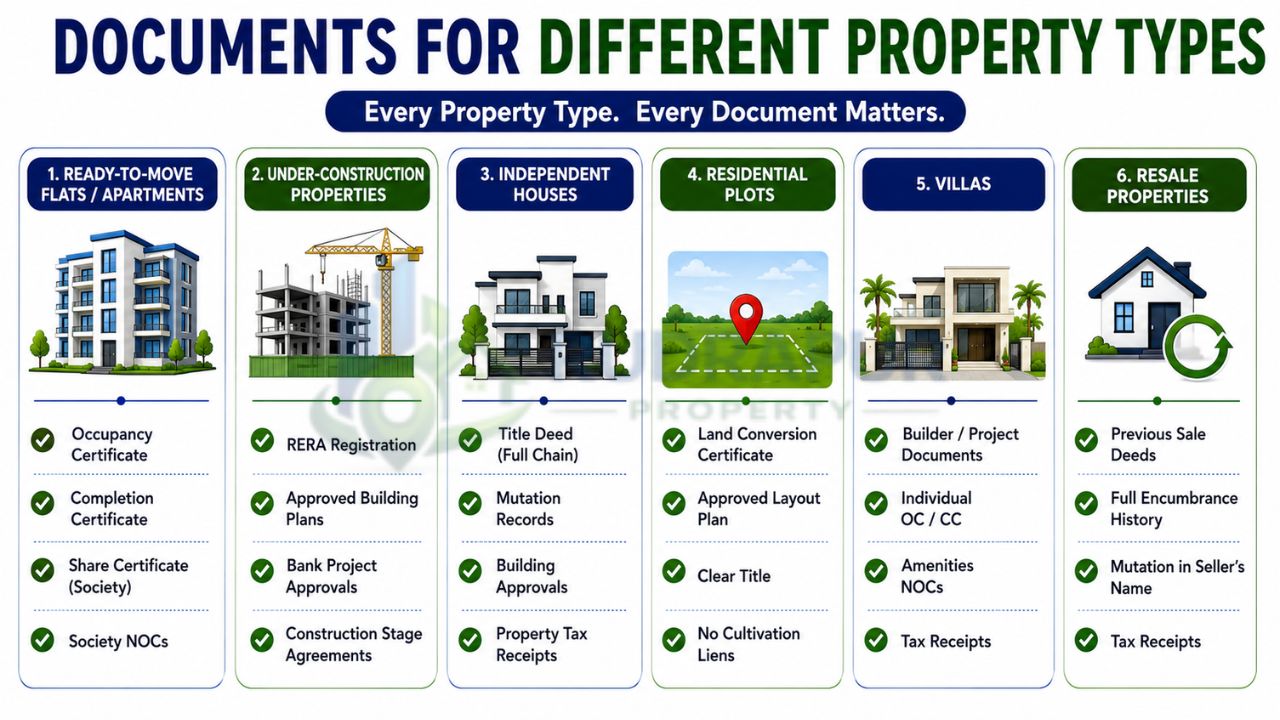
- Ready-to-Move Flats/Apartments: Focus on Occupancy Certificate, Completion Certificate, Share Certificate (if in a society), and Society NOCs.
- Under-Construction Properties: Prioritize RERA registration, approved building plans, bank project approvals, and construction stage agreements.
- Independent Houses: Emphasize full title deed chain, mutation records, building approvals, and tax receipts.
- Residential Plots: Check land conversion certificate (agricultural to residential), approved layout plan, and clear title without cultivation liens.
- Villas: Look for all builder/project documents plus individual OC/CC and amenities-related NOCs.
- Resale Properties: Extra caution on previous sale deeds, full encumbrance history, and mutation in the current seller’s name.
In Rudrapur, plots and independent houses are popular — always verify local land records through the Uttarakhand Bhulekh portal.
Legal Checks Before Buying Property?
Perform these critical property legal documents verifications:
- Verify the complete chain of ownership going back 30+ years.
- Confirm there are no outstanding mortgages or liens via the Encumbrance Certificate.
- Check approvals from local authorities match the actual construction.
- Validate RERA details for any project (search on state RERA portal).
- Cross-check property tax and utility payments are up-to-date.
- Ensure the seller has clear authority to sell (especially in joint family properties).
Engage a reputable property lawyer for a title search report — this is one of the best investments in the buying process.
How Buyers Can Verify Documents?
Verification of property documents required for home buyers should never be left to trust alone:
- Property Lawyer: Hire an independent expert for thorough due diligence.
- Sub-Registrar Office: Get certified copies and confirm registration details.
- State RERA Portal: Check project status and complaints.
- Municipal / Development Authority Records: Verify approvals and tax status.
- Revenue Department (Bhulekh): Online check for khata and mutation in Uttarakhand.
- Bank Panel Lawyer: Mandatory if taking a home loan.
For Rudrapur buyers, local consultants familiar with regional offices can speed up this process significantly.
Documents Required for Home Loan Approval
Banks demand both property-related and personal documents:
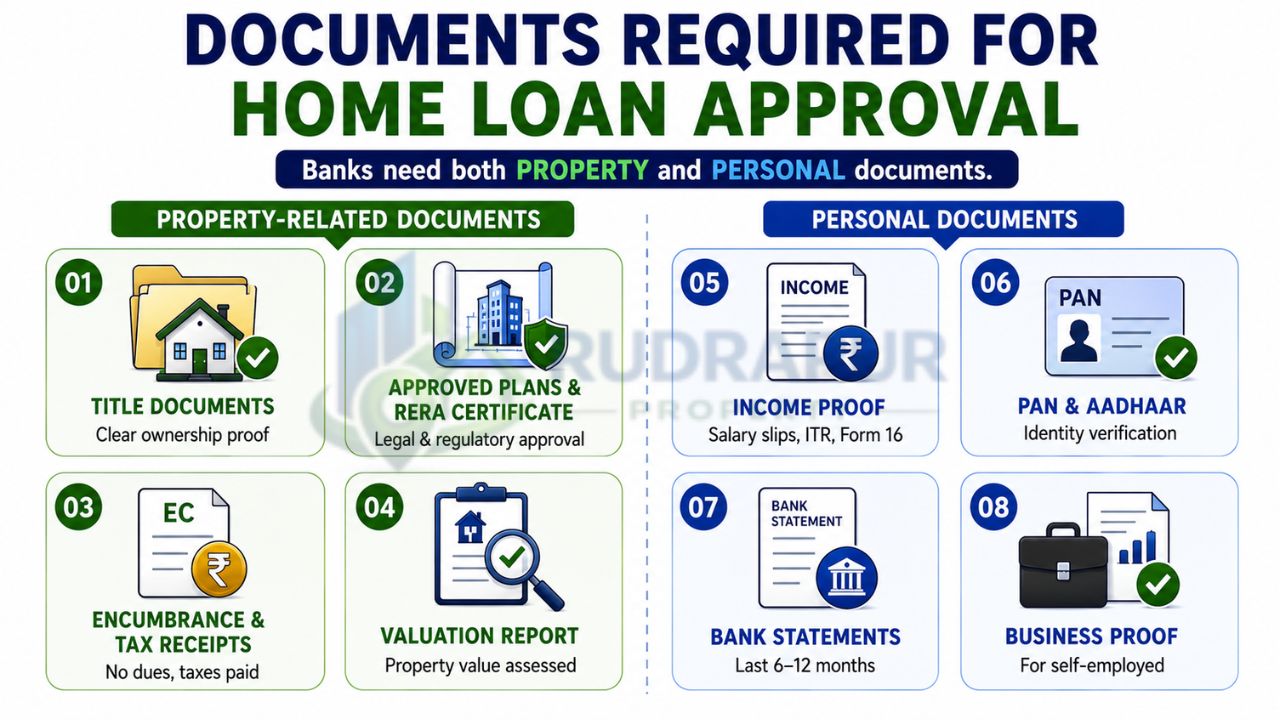
- Property title documents and legal due diligence report.
- Approved building plans and RERA certificate.
- Encumbrance Certificate and tax receipts.
- Buyer’s income proof (salary slips, ITR, Form 16).
- PAN Card and Aadhaar Card.
- Bank statements (6–12 months).
- Business proof (for self-employed).
- Valuation report of the property.
Having complete property verification documents makes loan approval faster and smoother.
Common Mistakes Home Buyers Make
Avoid these frequent errors with documents for house purchase:
- Relying only on verbal assurances instead of written documents.
- Skipping a fresh Encumbrance Certificate.
- Not verifying the full chain of title through the Mother Deed.
- Ignoring missing approvals or RERA registration.
- Failing to check mutation records in the seller’s name.
- Not reviewing society or builder NOCs.
- Underestimating the importance of Occupancy/Completion Certificates.
- Proceeding without a lawyer’s title search report.
These mistakes have led to many buyers facing litigation years after purchase.
How Proper Documentation Helps in Resale and Rental Value?
Complete and clear property legal documents significantly boost resale value and rental appeal. Banks prefer documented properties for future loans, tenants feel secure with proper ownership proofs, and buyers in the secondary market pay premium for clean-title properties.
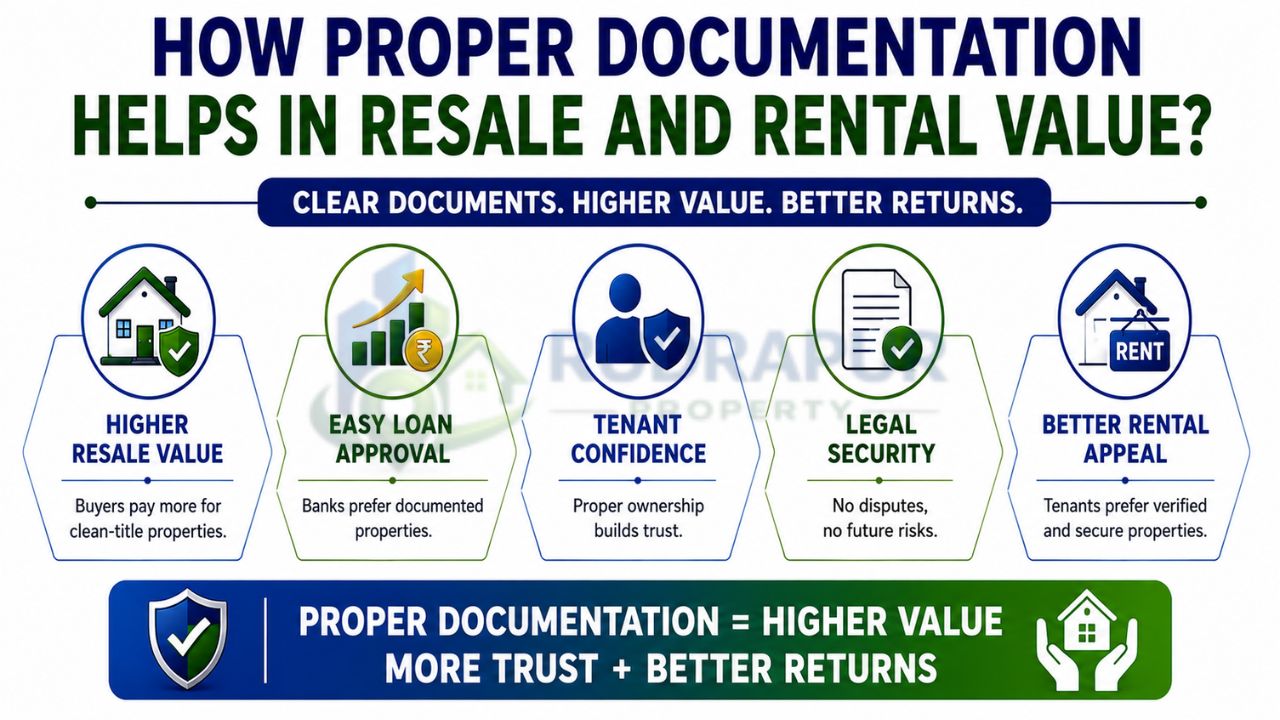
In Rudrapur’s growing market, well-documented houses, plots, and villas command better prices and rent faster.
Why Choose a Trusted Local Property Consultant?
Navigating property documents required for home buyers can feel overwhelming, especially with regional variations in Rudrapur and Uttarakhand. A trusted local consultant provides expert guidance on document verification, helps compare verified properties, arranges site visits, and coordinates with lawyers and authorities.
Local expertise ensures you understand area-specific requirements, market values, and potential risks while receiving end-to-end support from inquiry to registration.
Conclusion
Thorough verification of Property Documents Required for Home Buyers is the cornerstone of a safe and successful property purchase in India. By carefully checking title deeds, encumbrance certificates, approvals, RERA details, and other essential papers, you protect your investment and gain peace of mind.
Whether buying in Rudrapur or nearby areas, taking time for proper due diligence combined with professional guidance reduces risks dramatically. Stay informed, verify everything, and make your dream of owning a home a secure reality.
Are you searching for property documents required for home buyers and want expert guidance before making a purchase? At Rudrapur Property, we help buyers, sellers, and investors make informed decisions with reliable property support across Rudrapur. Whether you are buying a house, plot, villa, or commercial space, our team is here to guide you through the property process with confidence and clarity.
- Call/Whatsapp: +91 7060150855
- Visit: rudrapurproperty.com
- Serving: Whole Rudrapur and surrounding areas
Frequently Asked Questions (FAQs)
What are the main documents required to buy property in India?
The most important ones include Title Deed, Sale Deed, Encumbrance Certificate, Khata/Mutation records, Approved Building Plans, Occupancy Certificate (where applicable), and RERA details for projects.
Is an encumbrance certificate necessary for home buyers?
Yes. It confirms the property is free from any legal or financial liabilities, making it one of the most critical property verification documents.
What documents are needed for a home loan?
Banks require property title documents (title deed, EC, approvals), plus your income proofs (ITR, salary slips), PAN, Aadhaar, and bank statements.
How do I verify property ownership?
Review the chain of title deeds, obtain Encumbrance Certificate, check mutation records, and get a title search report from a qualified lawyer.
What should I check before buying a resale house?
Focus on previous sale deeds, full encumbrance history, mutation in seller’s name, tax receipts, and Occupancy Certificate.
Are approval documents important for plots and villas?
Absolutely. Approved layout plans, land conversion certificates, and building permissions are essential to avoid future demolition or regularization issues.
Can a buyer purchase property without legal verification?
Technically possible but highly risky. Skipping verification often leads to title disputes, loan rejections, or legal complications later.